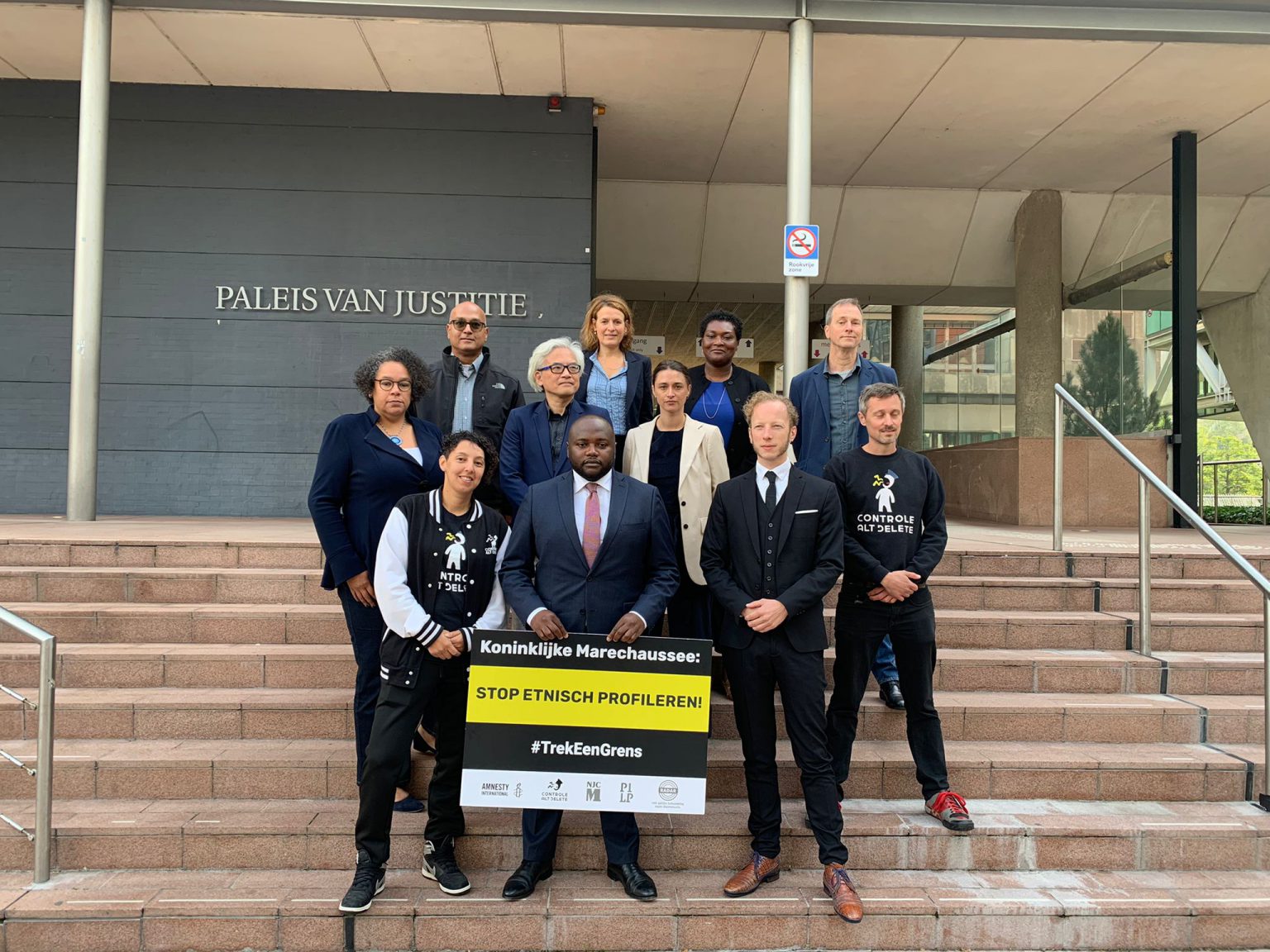
A coalition of civil society organizations and two non-white citizens have appealed the court’s ruling on ethnic profiling by the Royal Military Police (KMar) during MTV (Mobile Security Surveillance) checks.
During these checks in the border area, the KMar selects people based on their appearance, skin color, (alleged) ethnicity or nationality, among other things. There is no individual suspicion against the people being checked. The KMar uses risk profiles in these border checks in which ethnicity is a component, such as the profile of the “Nigerian money smuggler”: “Fast moving, well dressed with a “non-Dutch appearance.” One of the plaintiffs in the coalition was removed from the row because of this profile.
Skin color “objective indication” of nationality
The coalition disputes the court’s ruling that (alleged) “ethnicity may be part of risk profiles used by the KMar.” According to the court, ethnicity may even be a decisive criterion for stopping someone – the coalition also appeals against this. The coalition also opposes the ruling that a person’s skin color “may be an objective indication of a person’s alleged nationality.” These views, according to the coalition, are completely false. They are premised on an outdated, problematic and incorrect view of citizenship that is that there is one typical Dutchman and that Dutchman is white. According to the coalition, the court therefore incorrectly applied the discrimination test.
KMar uses border control for other purpose
Another point criticized by the coalition concerns the way the KMar deploys MTV checks in practice. According to the Aliens Decree 2000, article 4.17a, the MTV checks are aimed at countering illegal residence after crossing borders. During border controls, the KMar may stop people and ask for their ID and nationality, without the need for individual suspicion. However, the KMar also uses the same authority to tackle cross-border crime – a criminal task. This matters because MTV checks are proactive; there need not be a reasonable suspicion of guilt of committing a crime before the check may be carried out. According to the coalition, this is not how MTV checks are legally defined. Moreover, the KMar uses ethnically charged risk profiles in this process, think of the profile of the “Nigerian money smuggler. This, according to the coalition, violates the ban on discrimination.
KMar argues that ethnicity in risk profiles is legal
In late 2021, Lieutenant General Hans Leijtens informed the House of Representatives that the KMar will stop ethnic profiling. The coalition responded positively to this, stating that this is an important first step toward equal treatment of people of color. Nevertheless, in the Lower House, the KMar remained of the opinion that using ethnicity as an indicator in profiles and selection decisions for the MTV, is legally permissible. According to the KMar, such action is based on a “solid legal basis,” with the KMar feeling strengthened by the court ruling. Therefore, in addition to substantive legal objections to the ruling, the coalition also felt compelled to appeal.
Further proceedings
On May 17, 2022, the coalition filed the statement of objections with the Hague Court of Appeal. This contains their substantive objections to the ruling. The State must file the Statement of Reply by the end of July 2022. The Court of Appeal will then assess whether another written round is needed, or whether an oral hearing will be scheduled. The coalition expects the oral hearing to be scheduled May 2023.
The case was brought by two Dutch citizens, along with Amnesty International, Control Alt Delete, the Dutch Legal Committee for Human Rights (NJCM), and anti-discrimination service RADAR.