In February 2024, Amsterdam University College (AUC) imposed far-reaching sanctions on six students for their alleged involvement in student protests about Palestine on campus. PILP assisted these students with their objections to these sanctions. Now, in response to these objections, AUC has informed the students that all sanctions have been withdrawn. This shows that standing up for your rights works.
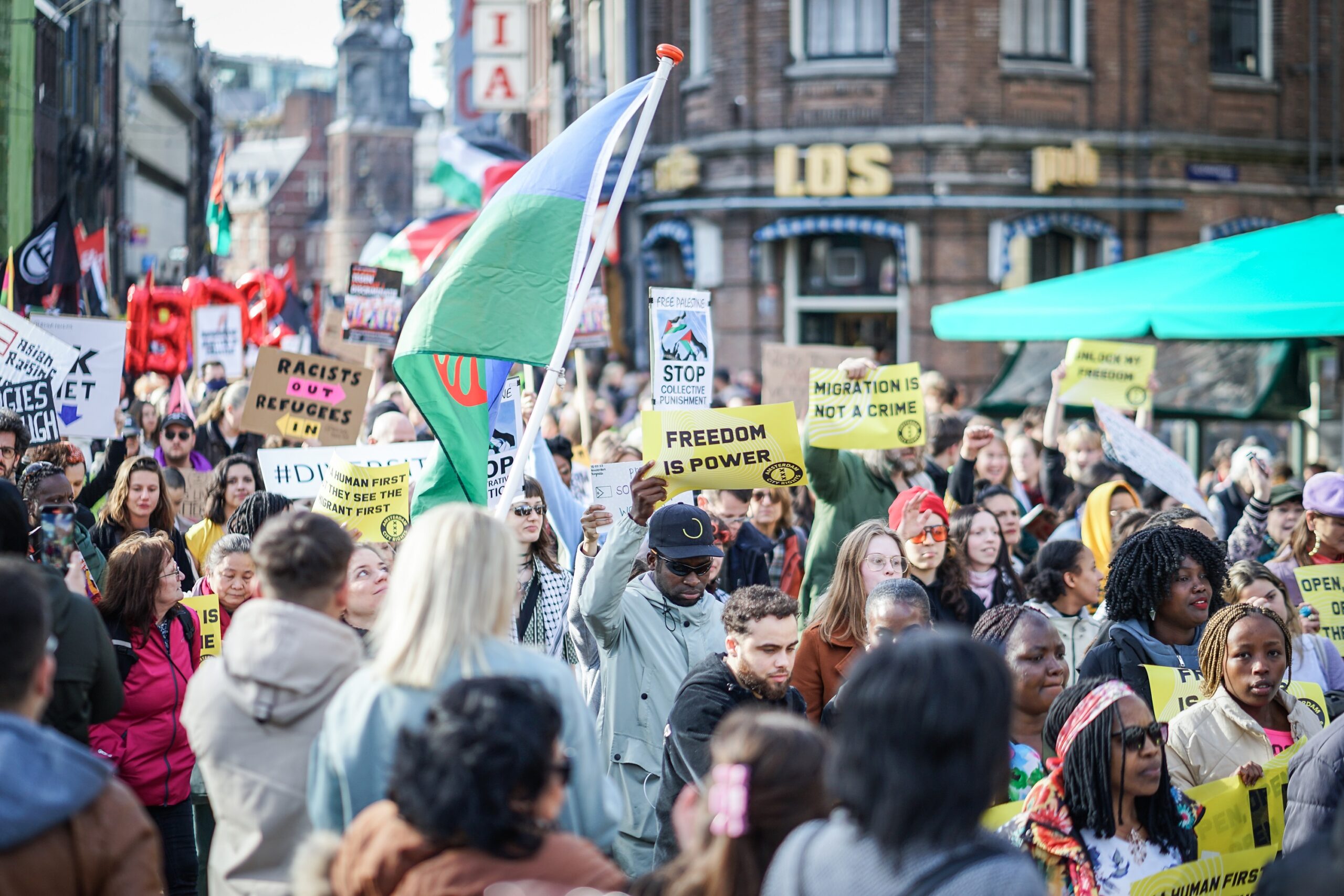
In February, several protests took place at AUC, organized by student organization AUFree Palestine (“AUFP”). AUFP is a movement of critical AUC students who are deeply concerned about the situation in Palestine. Among other things, they speak out against AUC’s ties to academic institutions in Israel who are an accessory to human rights violations.
Sanctions
Because of alleged involvement in these protests, six students were summoned to an interview with the dean of the university and were subsequently given sanctions. Half of the students were given a formal warning, and the other half were given a socio-political suspension (“social probation“) until the end of the semester. That means, among other things, that these students cannot work for AUC as a student assistant, cannot study abroad, and also had to complete extensive punitive work in the form of a writing assignment.
According to AUC, the six students allegedly were involved in “intimidation and aggression” during the protests in February. However, AUC did not provide any evidence of this, nor for their presence at the protests.
Objections
In their objections, the students argued that the decision (which were without factual justification) were insufficiently motivated. They also felt that the sanctions were disproportionate. Freedom to demonstrate and freedom of expression do not stop at the entrance to the university building. Moreover, it is part of the university’s democratic system that students should be able to freely and openly raise and criticize policy issues, especially when these issues are controversial, topical and urgent.
Broader context
The sanctions caused a stir within the broader community of AUC students. For the six students, the sanctions created stress and a sense of insecurity at their own university. The sanctions should be seen in the context of an increasingly repressive climate at Dutch universities regarding the war in Gaza. Academics and students are experiencing restrictions in organizing teach ins and lectures on the subject. At a recent protest at AUC, several students were arrested by police.
The fact the sanctions are withdrawn is good news for the six students: they can now complete their semester without stress. It is also a positive signal to the broader student movement. Making an objection can help, and you can stand up for your rights.
In this procedure, PILP worked together with the European Legal Support Center (ELSC). The ELSC provides for legal support to people in Europe who stand up for Palestinian rights.